
In 1952, a group of remarkable women at a small country church in rural North Dakota were concerned about the number of boys who were "out on their own." Boys as young as 9 or 10 were in the workforce, particularly as farm labor, because their families did not have the means to support them. Many were "half-orphans," whose fathers had died in WWII, or whose mothers had died in childbirth or of illness. These children were in survival straits, just trying to make it from day to day.…
psychiatric residential treatment
The education our kids receive at Dakota Memorial School is an integral part of the services we offer, both to our kids in the residential program, as well as to our Day Students from the surrounding communities. The paraprofessionals (paras) in our schools are a critical component to the provision of exceptional special education services and support. They are an important aspect of the Trauma Learning Culture at Dakota Memorial School (DMS), as they model a positive and encouraging attitude. At DMS, paras help students learn academic and social skills, encourage positive behavior, and provide one-on-one instructional assistance to students under the supervision of a qualified teacher.…
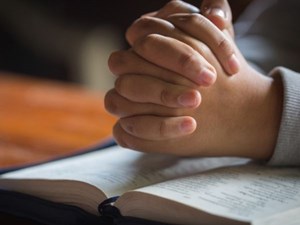
I've mentioned it before that every day, 365 days a year, the Chaplain at the Ranch, Rev. Rick Jones, sends a devotion and prayer by email to all Ranch staff. It is always the first thing in my mailbox every morning. The devotionals are always insightful and the prayers often make me catch my breath.…
The education our kids receive at Dakota Memorial School is an integral part of the services we offer, both to our kids in the residential program, as well as to our Day Students from the surrounding communities. The teachers who come to work each day to provide an education for our students are some of the most special people. We wanted to give them a space to share stories of their experiences in the classroom, so we are excited to present to you: Teacher's Corner.…

So many things are all about perspective, right? I don't know if you've ever read or remember the Far Side cartoons. One of my favorites was a drawing of a car's outside rearview mirror from the driver's perspective. The words "Objects in the mirror may be closer than they seem" were clearly written across the bottom of the mirror. The only reflection in the mirror is one HUGE eyeball. The "reality" of what might be really close always makes me giggle.…

I recently gave a Ranch presentation at a church in Illinois. After the service, a woman handed me a white candle in the shape of an angel, explaining that after each worship service, she collected the candles. She was told to throw away the candles when they reached a certain length. Not wanting to waste the wax, she began to collect the pieces and melt them to create angels to give as gifts.…

Every Monday, I send an internal e-newsletter to Ranch employees. As one part of that newsletter, I ask individual Ranchers to share their thoughts about how they in their individual roles, help fulfill the mission of the Ranch. The mission, "to help at-risk children and their families succeed in the name of Christ," is pretty lofty. It is not something anyone of us can accomplish alone, but rather we all have to do our own part.…
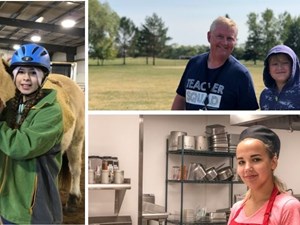
Last week we celebrated Thanksgiving AND it was also National Family Week! Boy, those two go together perfectly don't they? Family is the basic unit of any society. The people who accept us, support us, challenge us, and love us unconditionally are the people who shape our view of the world. Whether by birth or by choice, those we call family create the context in which we live our lives.…
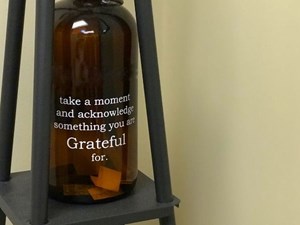
I have a glass bottle in my office that was a gift from a treasured friend. Written on the brown glass is "take a moment to acknowledge something you are grateful for." I also have a little stack of paper slips. Whenever someone asks me about the bottle, I encourage them to write down something they are thankful for and push the paper through the narrow neck of the bottle to "join" the other notes of gratitude. The simple act of stopping to think about the gifts we have been given can brighten a whole day.…

"The function of freedom is to free someone else." A few weeks ago, I was listening to the eulogizing of poet Toni Morrison, who had just died at the age of 88. Among the many wise words she wrote during her lifetime, this quote stood out to me. It resonated with the purpose and mission and daily efforts of Dakota Boys and Girls Ranch. It may seem ironic that a residential center is focused on freedom, since coming here is not often at a child's personal request,...so let me try to explain my thinking.…

Our on-campus school district, Dakota Memorial School (DMS), is a remarkable place. Teachers at DMS use trauma-sensitive approaches to learning in balanced learning environment classrooms. What does that mean? It means we understand that for most Ranch kids, school has been a place of failure. To survive amidst chaos and traumatic experiences most of us can't even imagine, they developed "undesirable" behaviors that make it hard to learn.…

I was listening to a speaker the other day talk about how it is almost a status symbol in today’s workplace to be overwhelmed by projects, input, decisions, information, and policies. The speaker suggested that a more successful approach was to measure and respect our own “personal bandwidth.”…

At Dakota Boys and Girls Ranch, we work very hard, in Christ's name, to help the kids who come to the Ranch to find their best selves. I believe the dedicated staff who work with our kids bring their own best selves and their unique talents to this place. By sharing their talents and passions, they set examples for the children. They show us how we can each be our true selves and make an impact in the world.…

It's hard to think about dying. I do know I will eventually die—we all will. But knowing that doesn't make it easier to think about. If we are hesitant to even think about our death, it makes sense that we also put off the planning that goes along with it. I recently stumbled on a little book titled, "The Gentle Art of Swedish Death Cleaning," by Margareta Magnuson. Margareta's words turned my thoughts towards the responsibilities I have to get my affairs in order so my death is easier on my loved on—at least regarding the distribution of my belongings and assets. Her words even helped me find a measure of delight in the process. Really.…

That is what we are here to do..."To help at-risk kids and their families succeed in the name of Christ." And, when we see that mission fulfilled in even one child, we are energized for the next and the next. We continue the "well-doing," and we never grow weary of seeing the beauty of a child becoming their best self.…
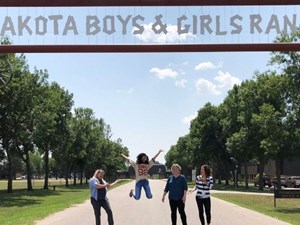
When I visit with people who work at Dakota Boys and Girls Ranch with me, I am always heartened to find that Ranchers know, regardless of their role, that they too can make a difference in the lives of the kids we serve. One person can make a tremendous impact on a child's life...but we never know which person and which moment might make the connection that changes everything. We are all in this together!…

When I was growing up, Dorothy Law Nolte's poem, Children Learn What They Live, was everywhere. It was first published in 1954 and exploded into popular culture where it stayed through the 1970s. When I was little, it was hanging on refrigerators, on posters in doctors' offices, in classrooms. The poem was even plastered on milk cartons and cereal boxes.…

We had a young lady at the Ranch who really touched my heart. Whenever she would see me, she would yell, "Joy," and then scurry up to wherever I was. She'd give me a side hug and beam from ear to ear. Over time, I made it my mission to teach her to shake hands firmly, with eye contact. She was an excellent learner!…
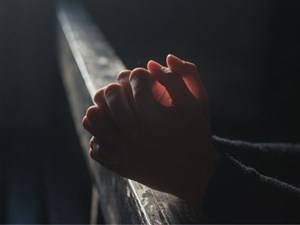
Christ is at the center of all our work at Dakota Boys and Girls Ranch. God is our hero. To stay grounded in our work, Chaplain Rick Jones sends out a Ranch daily devotional email. All of the devotions are potent, and every once in a while, one makes me stop in my tracks.…

Being a teenager is tough. You're not a kid. You're not an adult. Much is expected of you, but you don't have a road map. Your body is changing. Your thoughts are changing. Nothing seems to stay in place.…

It is almost impossible to overstate the caliber of people I have the honor of working alongside. The level of compassion and decency they bring, meeting each child in the midst of their pain, is inspiring. One of those remarkable people is Gladys Skinner, who is a Residential Supervisor in Challenge Cottage, a Residential Child Caring Facility for girls 12-18 years old. Gladys has been at the Ranch for over four years and she simply exudes, "I got this," in her daily work.…

Recently, the reading in church was from Luke’s gospel where Jesus shared the parable of the Good Samaritan. When I reflect on this lesson, I think about how I can be a better neighbor to those around me. I think about times I could have let someone go ahead of me in line, stopped to listen, offered encouragement to someone, or engaged in conversation with the grocery store clerk or the person bagging my purchases. This time, I stopped to think about the definition of the neighbor referenced as "the one" in the phrase, “The one who had mercy on him."…
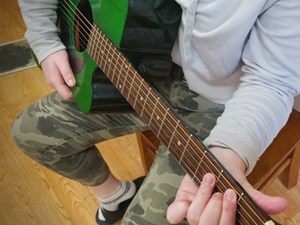
One of the most important things children discover in their time at Dakota Boys and Girls Ranch is their "voice." Most of our trauma-affected kids have been told what they are, what they think, why they are failures, and why they will always be failures. Through hard work, determination, and a commitment to their treatment and education, they begin to discover their strengths. They begin to tell their own true stories, in their own voice.…

When it comes to overcoming challenges, Helen Keller (1880-1968) set the bar quite high. She was a lifelong learner, teacher, inspiration. She danced, laughed, wrote, and loved. She was deaf, blind, and had great difficulty speaking. And, she changed the world and the way we view the potential of those with special needs. Her teacher and best friend, Anne Sullivan, who was herself blind and parentless, instilled a sense of hope in the young Helen. Anne had a persistent hope that guided Helen into her future.…
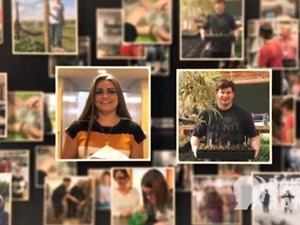
All of us at Dakota Boys and Girls Ranch are humbled and grateful each day. First, by the opportunity to serve the Lord by serving others. Second, that the “others” we serve are precious children on a journey of hope and healing to become their best selves. Third, that so many people, like you, support our work. The attitude of gratitude we carry into each day is more than a clever rhyme, it is a worldview based on the honor we feel. We try to find every way possible to share our thankfulness with everyone.…